Acanthophoenix rubra, the barbel palm, is a critically endangered palm endemic to Mauritius, Rodrigues, and La Reunion that is prized for its edible palm hearts.


Naming and description
It is also known as the red- or yellow- Barbel palm, red palm, Mascarene Islands cabbage palm, and palmiste rouge, palmiste bourre, palmiste des bois, palmiste des hauts, palmiste épineux, palmiste zépines, palmiste piquant in French.[2]
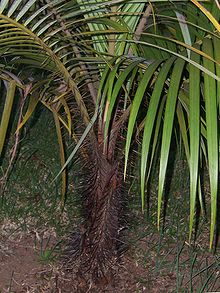
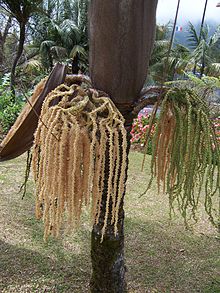
This palm was first described as Areca rubra by French naturalist Jean Baptiste Bory de Saint-Vincent in 1804 and classified by German botanist Hermann Wendland in its own genus Acanthophoenix in 1867. It can reach a height of 25 m. The trunk is slender, with a diameter of 18 cm. The crown contents of about 10 leaves approximately 3 m in size which are arranged convoluted.
In his 1995 checklist of seed plants, Rafaël Govaerts considered A. crinita to be a synonym of Acanthophoenix rubra, as did Govaerts and John Dransfield in their 2005 checklist of palms. However, in his revision of the genus, N. Ludwig recognised A. crinita as a separate species.[3]
Threats
The Barbel palm is endangered due to habitat destruction to make way for sugarcane plantations, and its high value as edible and medicinal plant. The palm heart is a delicacy. About 150 individuals occur in the wild on Mauritius. It is widely grown in cultivation.
Synonyms
- Areca rubra Bory (1804).
- Acanthophoenix crinita (Bory) H.Wendl. (1867).
| This article uses material from the Wikipedia article Metasyntactic variable, which is released under the Creative Commons Attribution-ShareAlike 3.0 Unported License. |